



Web app development has become a core capability for businesses that want to build scalable digital products, streamline operations, and create new revenue channels. In 2026, expectations from web applications are significantly higher. Performance, reliability, security, and user experience are not differentiators anymore. They are baseline requirements.
At the same time, the complexity of building modern web applications has increased. Businesses now need to make decisions about architecture, infrastructure, integrations, and long-term scalability from the very beginning. Poor decisions early in the lifecycle often lead to technical debt, rising costs, and delayed time to market.
This guide explains how web app development works in practice, what it realistically costs in 2026, and how to choose a tech stack that aligns with business goals rather than short-term trends.
What Web App Development Actually Involves
Web app development refers to building interactive software applications that run in a browser environment and allow users to perform actions, process data, and interact with systems in real time. Unlike traditional websites, web applications behave more like full software products.
Common use cases include SaaS platforms, internal enterprise tools, customer dashboards, marketplaces, and data-driven applications. These systems often integrate with third-party services such as payment gateways, CRM systems, analytics tools, and cloud-based APIs.
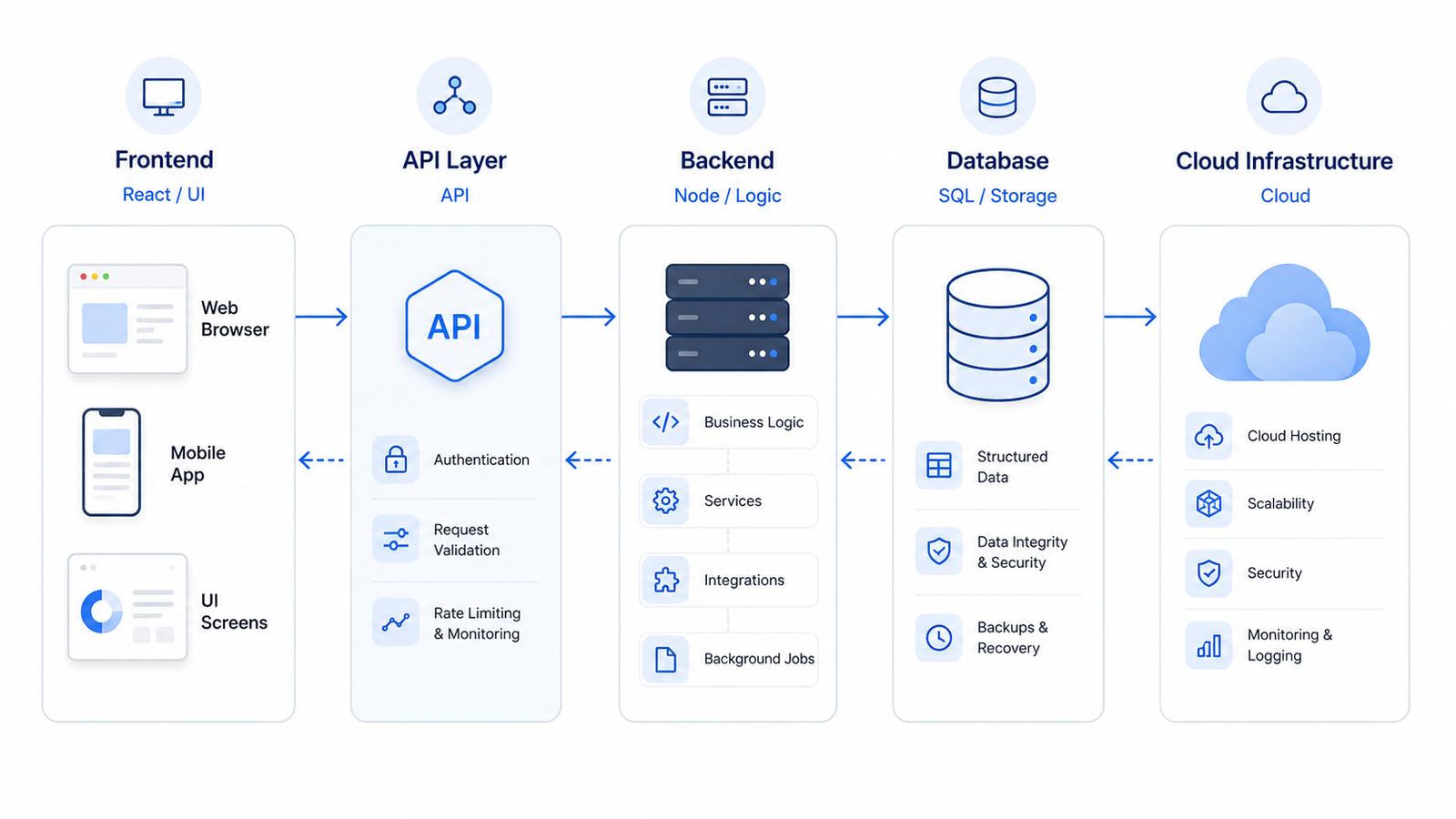
A production-ready web application typically includes several layers working together:
- Frontend interface that users interact with
- Backend systems that process logic and manage workflows
- Databases that store and retrieve data
- APIs that connect internal modules and external services
- Cloud infrastructure that ensures availability and scalability
Most organizations partner with a web app development company to ensure these components are designed as a cohesive system rather than independent parts.
The Web App Development Process: Phase by Phase
Discovery and Requirement Analysis
The discovery phase defines the direction of the entire project. It involves understanding business goals, identifying user needs, and defining the scope of the application.
Effective discovery goes beyond listing features. It focuses on outcomes. Teams analyze user journeys, identify bottlenecks in existing processes, and prioritize features based on business impact.
Key activities include stakeholder workshops, competitor analysis, and feasibility assessments. This phase also identifies technical and operational risks early.
According to McKinsey & Company, organizations that invest in structured discovery significantly reduce project overruns and improve product-market fit.
Product Architecture and Planning
Architecture planning determines how the system will behave under load, how it will scale, and how easily it can evolve. This is one of the most critical technical decisions in web app development.
Teams define:
- System architecture such as monolithic or microservices
- Data models and database design
- API structure and communication patterns
- Security and access control mechanisms
For example, a monolithic architecture may allow faster initial development, but it can become difficult to scale as the application grows. Microservices provide flexibility but introduce additional complexity in deployment and management.
The right choice depends on business scale, expected traffic, and long-term roadmap.
UI UX Design
UI/UX design directly influences how users interact with the product. A well-designed interface reduces friction, improves engagement, and increases conversion rates.
A structured UI/UX design process includes user flow mapping, wireframing, prototyping, and usability testing. Early validation ensures that the product solves real user problems before development begins.
Research from Nielsen Norman Group shows that usability improvements can significantly enhance user satisfaction and reduce abandonment rates.
Development Phase
During development, engineering teams build the frontend and backend systems based on the defined architecture. Work is typically divided into smaller iterations using agile methodologies.
A full stack development approach allows better coordination between frontend and backend teams, reducing integration issues.
At this stage, decisions around code quality, documentation, and testing practices influence long-term maintainability. Cutting corners may reduce short-term timelines but often increases technical debt.
Modern development workflows also include CI/CD pipelines, enabling automated testing and faster deployments.
Testing and Quality Assurance
Testing ensures that the application performs reliably across different environments and usage scenarios. It includes functional testing, performance testing, and security validation.
Security is particularly important for applications handling sensitive data. Frameworks and guidelines from OWASP help identify common vulnerabilities and improve system resilience.
Organizations that underinvest in testing often face higher costs after launch due to bug fixes and system failures.
Deployment and Maintenance
Deployment involves releasing the application to a production environment. However, this is not the end of the lifecycle.
Post-launch activities include monitoring performance, fixing issues, and continuously improving the product. Infrastructure optimization also plays a key role in controlling costs.
Many businesses leverage AWS consulting services to manage cloud environments and ensure scalability.
Choosing the Right Tech Stack for Web App Development in 2026
Choosing the right tech stack is a strategic decision that affects development speed, hiring, scalability, and long-term maintenance costs.
Frontend Technologies
Frontend technologies define how users experience the application. Performance, responsiveness, and SEO are key considerations.
- React for flexibility and ecosystem support
- Vue for simplicity and faster development
- Next.js for server-side rendering and improved performance
Many organizations invest in React JS development due to its scalability and strong community support.
Backend Technologies
Backend systems handle business logic, authentication, and integrations. The choice of backend technology depends on application complexity and scalability requirements.
- Node.js for real-time applications
- Python for data-driven and AI-enabled systems
- Java for enterprise-grade applications
For scalable and flexible systems, companies often choose Python development due to its extensive libraries and ecosystem.
Database and Infrastructure
Database selection depends on how data is structured and accessed. SQL databases provide consistency, while NoSQL databases offer flexibility and scalability.
Cloud infrastructure platforms such as Amazon Web Services enable businesses to scale globally while maintaining high availability.
Infrastructure decisions also impact cost optimization, latency, and disaster recovery capabilities.
Frontend vs. Backend: Understanding the Division of Labor
In web app development, the division between frontend and backend systems directly impacts performance and scalability. The frontend focuses on delivering a seamless user experience, while the backend ensures that data is processed accurately and securely. Both layers must work together efficiently.
Key Architectural Patterns
- Monolithic architecture for simpler applications
- Microservices for scalable and distributed systems
- Serverless for event-driven workloads
Each pattern has trade-offs. Microservices improve scalability but increase operational complexity. Serverless reduces infrastructure management but may introduce latency in certain use cases.
UI UX Design in Web App Development: Where Business Value Is Created or Lost
UI/UX design plays a critical role in product success. Even technically strong applications can fail if users find them difficult to navigate.
Best Practices
- Design for clarity and simplicity
- Ensure consistent navigation
- Optimize for mobile-first usage
- Continuously test with real users
Investing in wireframing early helps align stakeholders and reduces costly changes later in development.
Web App Development Cost: Realistic Benchmarks for 2026
Key Cost Factors
- Feature complexity and customization
- Technology stack and architecture
- Team location and expertise
- Third-party integrations
- Security and compliance requirements
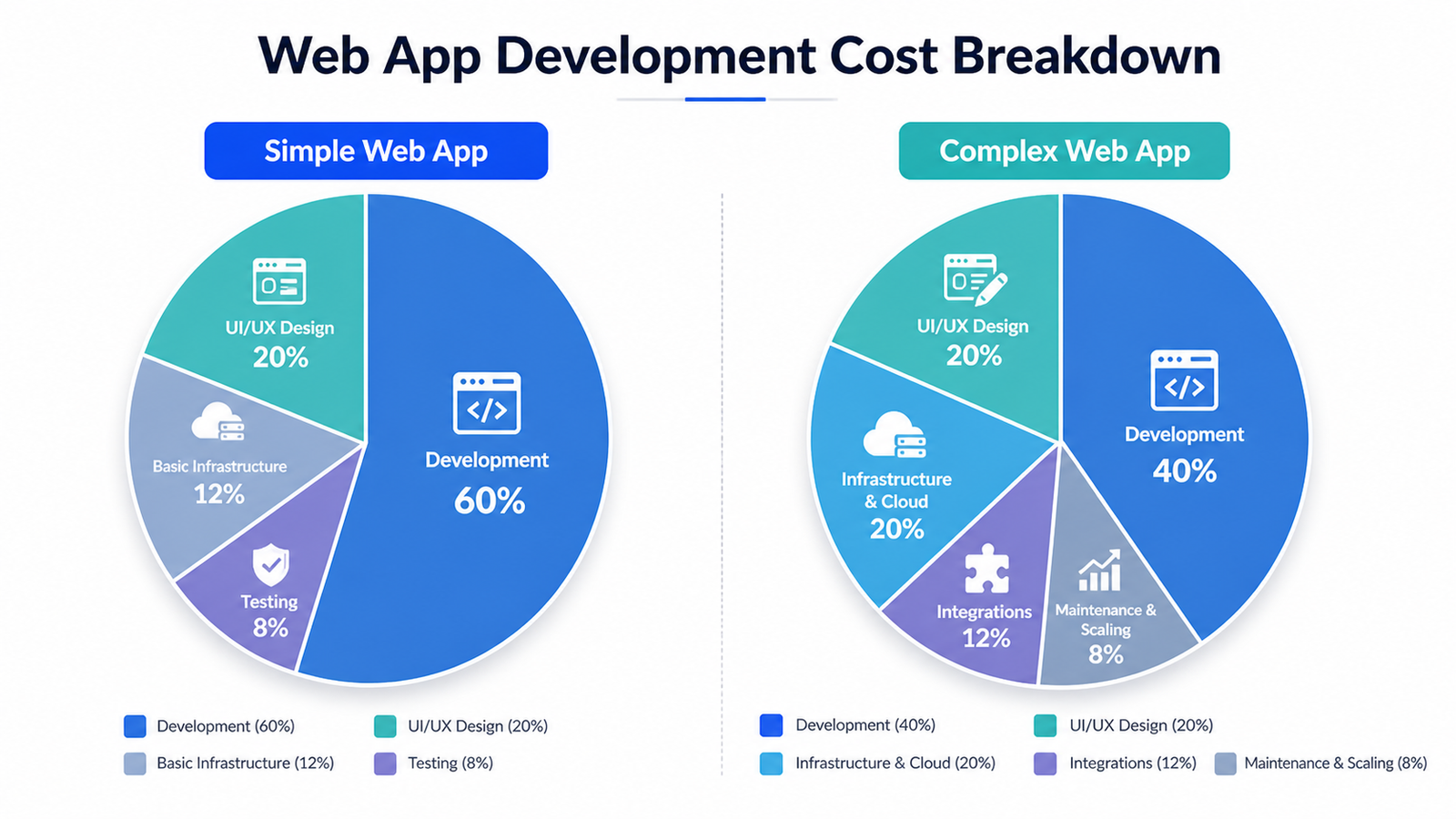
In addition to development costs, businesses should account for ongoing expenses such as infrastructure, maintenance, and upgrades.
Hidden costs often include:
- Cloud hosting and scaling costs
- API usage and licensing fees
- Monitoring and analytics tools
- Security audits and compliance updates
Typical Cost Ranges
- Basic applications: $15,000 to $40,000
- Mid-level platforms: $40,000 to $120,000
- Complex SaaS systems: $120,000 to $300,000+
Working with a SaaS development company can help align cost with long-term scalability and return on investment.
Key Trends Shaping Web App Development in 2026
- AI-driven features becoming standard
- Increased adoption of serverless computing
- Edge computing improving performance
- Growth of progressive web applications
- Stronger emphasis on data privacy and compliance
Insights from Gartner indicate that AI integration will soon become a baseline expectation across digital products.
Web App Development: Key Takeaways for Business Leaders
For business leaders, successful web app development depends on aligning technology decisions with long-term goals.
- Web app development is a long-term strategic investment
- Strong planning reduces cost overruns
- Tech stack decisions affect scalability and hiring
- UI/UX design directly impacts user adoption
- Choosing the right development partner improves outcomes
Planning Your Web App Development Roadmap?
Whether you’re defining the right tech stack, estimating development cost, or planning product architecture, our team helps you make informed decisions before you invest.

Frequently Asked Questions
These are common questions businesses ask when evaluating web app development projects.
How long does web app development take?
Typically between 3 to 9 months depending on complexity, features, and team size.
What is the difference between web apps and websites?
Web apps are interactive and allow users to perform actions, while websites primarily present information.
How do I choose the right development partner?
Look for proven experience, strong technical capabilities, and alignment with your business goals.
Is web app development suitable for startups?
Yes, especially when starting with MVP development to validate ideas quickly and efficiently.
Conclusion
Web app development in 2026 requires a structured approach that balances business strategy, technical execution, and user experience. Organizations that invest in proper planning and make informed decisions about architecture and technology are better positioned to build scalable and reliable digital products.
Partnering with an experienced custom web development company ensures that your application is built with long-term success in mind, rather than short-term delivery constraints.