


Software Solutions for Logistics Companies: Logistic...
Logistics software development is becoming a strategic priority for...
 Anshum Chauhan
June 27, 2025
Anshum Chauhan
June 27, 2025

Alta is an AI personal stylist app that raised $11M, landed in Vogue, and made millions of people rethink how they get dressed. If you’ve come across it, you’ve probably asked yourself: could I build something like this?
The short answer is yes. This guide gives you the long one.
Learning how to build an AI stylist app like Alta goes beyond listing features. It means understanding the AI models behind the recommendations, the tech stack that holds everything together, realistic timelines, and what it actually costs to go from idea to a live product.
This is for founders exploring fashion tech, product managers scoping a new build, or businesses ready to enter the AI styling space. Features, development process, tech stack, cost estimates — it is all here.
Alta is a personal AI stylist app designed to help users dress with confidence using the clothes they already own. It goes beyond basic outfit suggestions by learning your style preferences, understanding your wardrobe, and recommending looks tailored to your daily plans—whether it’s a date night, a work meeting, a vacation, or just a casual brunch.
At its core, Alta aims to make fashion more accessible, personal, and stress-free. Users can upload their entire wardrobe into the app and visualize all their clothing in one place. With a few taps, Alta suggests the perfect outfit for any occasion and even allows you to try on different looks using a virtual avatar that mirrors your body type and style.
Since its launch in 2023, Alta has gained significant attention and traction in the tech and fashion communities. The app raised $11 million in funding from well-known investors like Entrée Capital and Target Global, allowing the team to scale its AI capabilities and improve the user experience. It’s also been featured in Vogue, a testament to its growing cultural relevance and appeal among fashion-forward users.
Alta offers more than just outfit ideas; it delivers a personalized styling experience that fits your life. Here’s what makes it stand out:
Alta keeps things simple right from the start. The setup is quick, the layout of the app is clean, and everything works the way you expect. You don’t need to follow trends or be tech-savvy for this.
The only thing you need to do is just answer a few easy questions, and Alta starts curating outfits that feel right for you. Whether you’re using it for the first time or checking it each morning, the experience stays smooth, familiar, and stress-free.
When you are using Alta, it doesn’t feel like a robot who is giving you random suggestions. Instead, it offers style tips to its users in a very calm, friendly way, like a close friend who knows your style.
The design of the app is clean, the tone is easygoing, and every outfit suggestion feels like it was picked with you in mind. It doesn’t push or overwhelm, it simply helps you choose what feels right, without the stress.
When you have a time crunch, Alta helps you keep things simple. Instead of giving you a long list of options, it provides you a few thoughtful suggestions that actually fit your day. There are no distractions, no guesswork, you will just get quick, relevant ideas that help you get dressed and get going. The app is created to save you time and headspace, so styling never feels like a chore.
When you are busy with your routine work, Alta fits in without adding to the chaos. No matter where you are going, it gives you the last minute outfit suggestions that go well with the moment.
It checks the weather, looks at your calendar, and remembers what’s in your wardrobe, so every recommendation feels right for your day. The app is not not just about looking good, it’s about making your day easier.
To build a competitive app, your AI stylist must offer more than just outfit ideas. Here are the essential features:
When you start using the app, it starts with a simple, thoughtful onboarding flow. Instead of overwhelming them, it gently collects the basic data like your body type, the size of your clothes, favorite colors, style preferences.
All of this helps the app build a clear picture of who you are and what you are like. The better the profile, the smarter and more personal the outfit suggestions become over time.
This is where Alta really starts to help. It uses AI to look at your style, the weather, your plans for the day, and even your mood. Then it brings all of that together to suggest outfits that actually make sense for what you’re doing.
The suggestions aren’t just nice to look at, they’re comfortable, easy to wear, and fit your real life. Whether you’re heading to work or going out with friends, Alta helps you feel put together without spending too much time deciding.
This is the best feature of Alta. It lets you try on clothes without stepping into a fitting room. Using AR or a digital avatar, you can see how an outfit might look on you before making a choice.
It takes the guesswork out of shopping, especially online, and helps you feel more sure about what you pick. It’s a fun and a very simple way to try new styles and see what works for you, right from your phone.
This feature works like your own outfit planner. You can schedule what to wear for workdays, special events, trips, or anything else on your calendar. It’s especially helpful when things get busy and you don’t want to waste time deciding at the last minute.
As you keep using it, the app starts to notice your habits and can even remind you of past outfits you liked, making your mornings a little less rushed and a lot more put together.
With this feature users can smartly manage their wardrobe. Because it creates a digital version of your closet, so you always know what you have and how often you’ve worn it. You can add items manually or connect your shopping history to pull them in automatically.
From there, the app helps you build new outfits using what’s already in your wardrobe, making it easier to get dressed and avoid repeat buys. It also supports more mindful fashion by helping you use what you already own in fresh, creative ways.
ALTA provides an effortless shopping experience to its users. When the app suggests an outfit, you can explore and buy the pieces right there, no need to switch apps or open new tabs. It connects directly to partner brands and stores, keeping everything in one place.
You also get helpful touches like personalized filters, restock alerts, and price drop notifications. So whether you’re ready to buy or just browsing, the experience feels easy, personal, and seamless from start to finish.
The chatbot is what makes the app feel truly personal. It’s like having a stylist you can chat with anytime ready to answer questions like “What should I wear to a wedding?” or “Does this jacket match these pants?”
It’s friendly and easy to talk to, giving you quick, trustworthy advice whenever you need it. Having that kind of support right at your fingertips makes getting dressed simpler and more confident.
Building an AI stylist app like Alta isn’t just about adding features, it’s about creating a personal, useful experience that fits into everyday life. Here’s a step-by-step guide to help you make it happen.
If you want to create an app that is truly useful, you have to start with the people who’ll be using it. What are their style struggles? How do they shop? What frustrates them about getting dressed each day? You need to dig deep to know about the habits and needs, and then take a close look at other apps in the space, what they’re doing well, and where they fall short.
This kind of research helps you shape the app in the right direction. It guides your feature list, your tech choices, and your timeline. When you start with a clear picture of your audience, everything else becomes more focused and intentional.
Design gives the app its look and feel. It not only makes things visually appealing, but provides an experience that feels easy and familiar from the very first tap. Create simple layouts, clean visuals, and clear navigation as it helps users feel comfortable right away.
Even the more complex actions, like uploading clothes or browsing outfit ideas, should feel effortless. You can start with rough prototypes, test them early, and use feedback to fine-tune the flow. When everything feels natural to use, the design quietly does its job, and users keep coming back.
At this stage the app starts learning who the user really is. To personalize the styling, your AI needs to understand more than just size or color. It should also know about the body shape, style preferences, favorite fabrics, weather patterns, and even day-to-day routines.
Over time, it should also pick up on shopping habits and calendar events to offer smarter suggestions. The more it learns, the better it gets. As users keep using the app, the AI should learn and improve in the background. So the suggestions start to feel more personal and less like random guesses.
Your MVP (Minimum Viable Product) is where the real feedback begins. It’s a simple version of the app with just the essentials, like signing up, getting outfit suggestions, using basic AI, and trying out wardrobe features. It doesn’t need to be packed with everything on day one.
What matters most is that users can try it, explore it, and show you what works (and what doesn’t). A focused MVP helps you learn quickly, improve faster, and move forward with confidence. Many startups work with experienced mobile app development teams to build and launch MVP versions quickly.
Before you launch, take some time to test every part of the app. You can test your app on different devices, screen sizes, and operating systems to make sure it feels smooth everywhere. You need to check everything that slows users down, bugs, broken flows, or interactions that don’t make sense.
The AI should feel helpful, not random, so check that the recommendations actually fit the user’s style and needs. You can also involve a QA team and real users to spot problems you might miss. Testing isn’t just about fixing bugs, it’s about making sure everything feels smooth and ready from the start.
Once your app goes live, it’s not the end, it’s the beginning of something active. Start by watching how people actually use it. What features do they come back to? Where do they drop off? What are they saying in reviews or support chats? These insights are gold.
Use them to fine-tune the AI, make updates that matter, and build features people are genuinely asking for. The apps that last are the ones that keep evolving. Stay responsive, keep improving, and turn first-time users into long-term fans.
The cost of building an AI stylist app like Alta depends on the complexity of AI features, supported platforms, and development time. A simple MVP with basic outfit recommendations can be developed faster, while advanced apps with AI styling, computer vision, and virtual try-on require a larger investment.
Below is a rough estimate of development costs for an AI fashion styling app:
| App Type | Estimated Cost |
|---|---|
| Basic AI stylist MVP | $35,000 – $60,000 |
| Mid-level AI styling app | $60,000 – $120,000 |
| Advanced AI fashion platform | $120,000 – $250,000+ |
AI model complexity
Features like outfit recommendations, style analysis, and body type detection require machine learning and computer vision models, which increase development effort.
Virtual try-on technology
If the app includes virtual try-on using augmented reality or 3D rendering, additional development time and infrastructure are required.
Platform selection
Developing the app for both iOS and Android increases the cost compared to launching on a single platform.
Third-party integrations
Integrations with fashion retailer APIs, payment systems, and recommendation engines may add to the development cost.
UI/UX design
Fashion apps require visually appealing and highly interactive interfaces, which can increase design and front-end development time.
Developing an AI stylist app like Alta requires a combination of mobile technologies, backend infrastructure, and artificial intelligence tools. The right tech stack ensures the app can analyze user preferences, recommend outfits, and process visual data efficiently. Many businesses work with an experienced AI development company to integrate machine learning models and recommendation systems effectively.
The frontend is responsible for delivering a smooth and visually appealing user experience. Fashion apps rely heavily on clean interfaces and fast interactions.
The backend handles user data, AI processing requests, and integrations with fashion APIs or databases.
AI plays a central role in generating outfit recommendations and analyzing fashion preferences. Many AI styling platforms rely on advanced machine learning development to understand user behavior and improve recommendations over time. Fashion AI models are often trained on large datasets such as the DeepFashion fashion AI dataset, which helps AI systems recognize clothing attributes and styles.
Cloud services allow the platform to scale and handle AI workloads efficiently. Many AI-powered applications rely on platforms such as AWS Machine Learning to train, deploy, and manage machine learning models at scale.
Depending on the app features, additional technologies may be required.
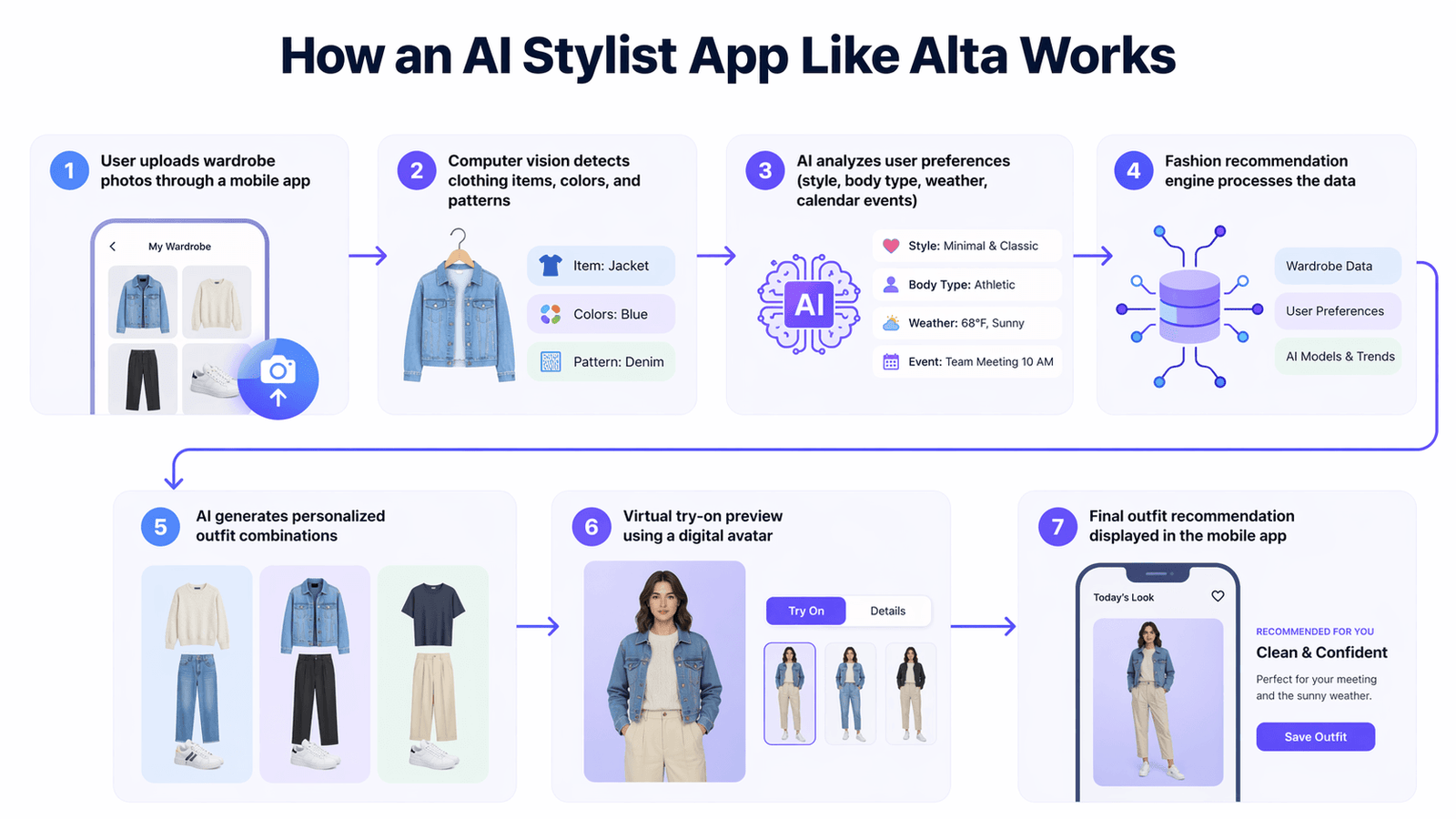
The diagram above illustrates how wardrobe data, AI models, and recommendation systems work together to generate personalized outfit suggestions.
AI stylist apps can generate revenue through multiple monetization models. Choosing the right strategy depends on your target audience, partnerships, and the value your platform provides to users.
One of the most common monetization strategies is offering premium styling features through a subscription plan. Users can access advanced outfit recommendations, exclusive styling insights, or personalized fashion advice by paying a monthly or yearly fee.
AI stylist apps can partner with fashion retailers and earn commissions through affiliate links. When users purchase clothing recommended by the app, the platform receives a percentage of the sale.
Apps can offer additional features such as premium outfit suggestions, advanced virtual try-on capabilities, or exclusive styling collections through one-time in-app purchases.
Fashion brands may collaborate with AI styling platforms to promote their collections. These partnerships can include sponsored outfit recommendations, featured brand placements, or exclusive promotions.
Some AI stylist apps provide premium personal styling services where users receive curated outfit suggestions based on their preferences, lifestyle, and wardrobe. This service can be offered as a paid upgrade.
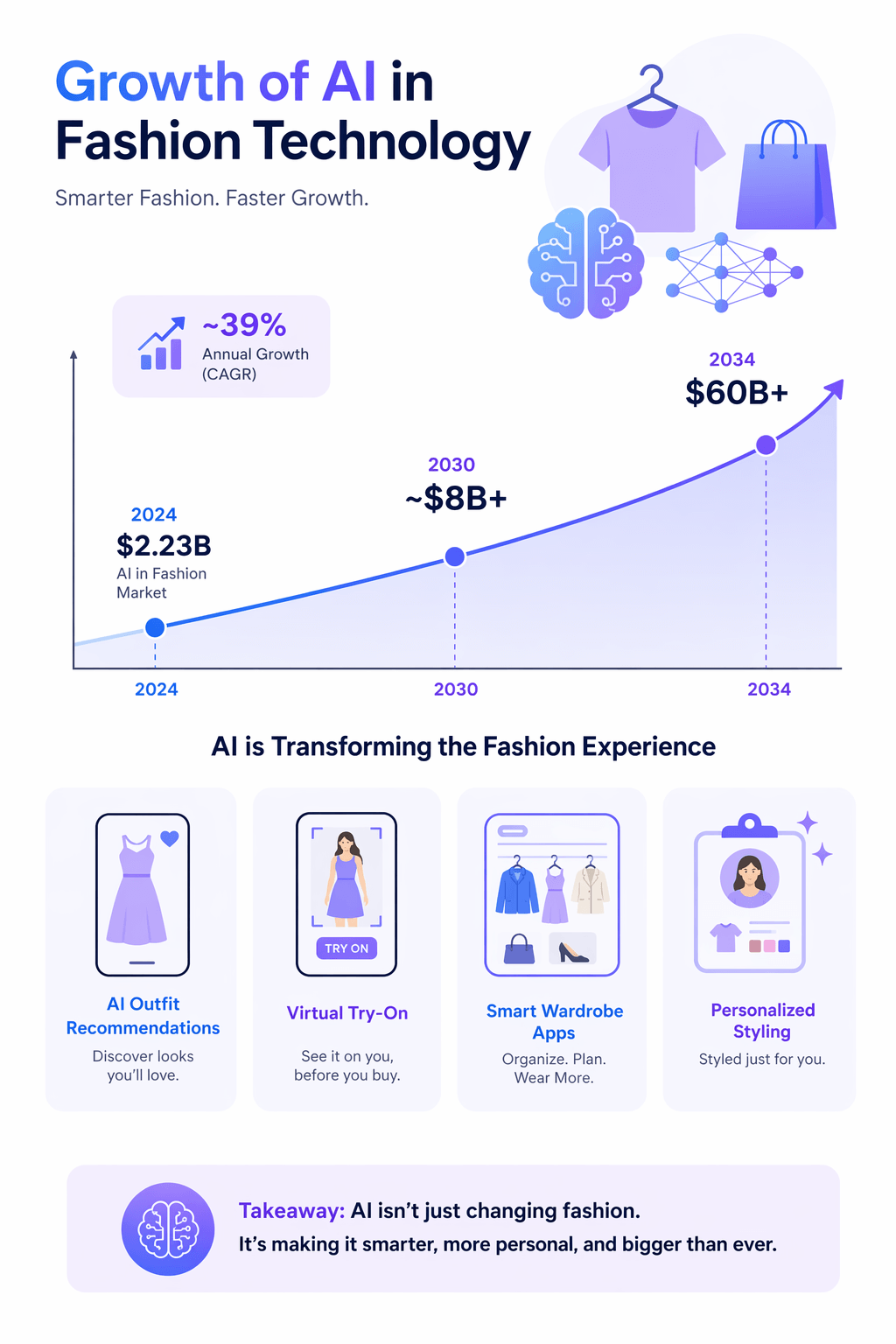
Sources:
Precedence Research,
Grand View Research
The fashion industry is undergoing a major transformation as artificial intelligence becomes more integrated into everyday shopping and styling experiences. AI-powered fashion apps can analyze user preferences, recommend outfits, and even predict upcoming style trends.
Apps like Alta show how powerful this technology can be. When businesses explore how to build an AI stylist app like Alta, they are not just building a fashion tool—they are creating a personalized digital styling assistant.
Several factors are driving the rapid growth of AI fashion apps:
As AI models become more accurate and fashion data becomes richer, the demand for intelligent styling apps will continue to grow. This creates a strong opportunity for startups and businesses exploring fashion tech innovation.
Apps like Alta feel personal because the AI learns what works for you. It adapts to your daily life and makes getting dressed easier.
Here’s how:
The AI pays attention to what’s happening around you, like the weather, your calendar, or the kind of day you’re having. Whether you’re getting dressed for a meeting or a weekend brunch, it suggests outfits that actually fit the moment.
You don’t have to constantly fill things out or change settings. The app learns from how you interact with it, what you wear, skip, or save, so the suggestions naturally get better, without asking too much from you.
Every time you use the app, it gets a little smarter. The more it learns about your preferences and routines, the more the suggestions start to feel like they were picked just for you.
AI isn’t just about what’s popular, it’s about what’s practical for you. It looks at your lifestyle and recommends looks that make sense for your daily routine, not just for a fashion magazine.
By learning what you already own and love, it can suggest how to rewear pieces in new ways, fill in wardrobe gaps, or avoid unnecessary buys. It’s smart fashion support—not pressure to shop more.
Building an AI styling app takes more than smart tech, it’s about creating something that feels personal, useful, and easy to trust. Here are a few tips to help make that happen:
You can start by focusing on the essentials. Rather than trying to include everything at once, you should prioritize doing a few core features really well like outfit recommendations, simple onboarding, and wardrobe uploads.
When these key parts run smoothly, your app gains momentum. You can always add more later, but keeping it simple at the start gives users a clear reason to keep coming back.
Building trust is just as important. Personalization works best when users feel in control. Let them easily adjust suggestions, skip outfits, or provide feedback.
These small choices go a long way in making people feel heard. When users know the app listens, they trust it more and the AI improves faster by learning from their real preferences.
Not every user is the same, so your app shouldn’t feel like it was built for just one kind of person. Support all body types, styles, genders, and skin tones.
Add features that reflect real-world diversity, like inclusive avatars, different cultural looks, or adaptive sizing options. When people feel seen, they’re more likely to stay.
Smart styling starts with good data. Without accurate, up-to-date fashion info, AI is just guessing. To make real, useful suggestions, your app needs access to the right sources, whether that’s through retail partnerships, fashion APIs, or your own curated style library. The better the data, the more relevant and wearable the recommendations will feel, so users trust what they see and actually want to try it.
AI styling apps often handle deeply personal details, like body measurements, wardrobe photos, and style preferences. That’s why privacy can’t be an afterthought. Be clear about how the data is used, give users full control, and make it easy to update or delete anything at any time.
When people feel safe sharing their info, they’re more likely to engage, and that trust becomes a core part of the experience.
If you are researching how to build an AI stylist app like Alta, it is helpful to understand the existing apps already shaping the AI fashion space. These platforms use artificial intelligence to deliver personalized styling experiences and fashion recommendations.
| App | Main Feature | Focus |
|---|---|---|
| Alta | AI outfit generation and wardrobe styling | Personal AI stylist |
| Style DNA | Body scanning and personalized fashion recommendations | Personal styling |
| Vue.ai | AI-powered fashion retail automation | Retail AI solutions |
| Amazon StyleSnap | Image-based fashion search and recommendations | Visual shopping |
Studying these platforms can provide valuable insights when planning how to build an AI stylist app like Alta or designing a new AI-powered fashion experience.
An AI stylist app uses artificial intelligence to analyze user preferences, body type, and fashion trends to recommend personalized outfits. These apps typically rely on machine learning, computer vision, and recommendation algorithms to generate styling suggestions.
AI stylist apps work by collecting user preferences, analyzing clothing images, and applying machine learning models to generate outfit recommendations. Computer vision technology helps identify clothing attributes such as color, pattern, and style, while recommendation engines suggest combinations that match user tastes.
The development timeline depends on the complexity of features and AI models. A basic MVP version may take around 3–5 months, while a fully featured AI styling platform with advanced recommendation systems and virtual try-on capabilities may require 6–10 months of development.
AI fashion apps use a combination of machine learning, computer vision, and recommendation algorithms. Popular technologies include TensorFlow, PyTorch, OpenCV, and cloud platforms like AWS or Google Cloud to process visual data and generate outfit suggestions.
Yes. AI models can analyze user wardrobe data, fashion trends, and historical preferences to automatically generate outfit combinations. Generative AI and recommendation systems are often used to create personalized styling suggestions.
Common features include AI outfit recommendations, wardrobe management, style preference learning, virtual try-on, fashion trend analysis, and personalized shopping suggestions.
AI is rapidly transforming the fashion industry by enabling personalized styling experiences. As machine learning and computer vision technologies continue to improve, AI-powered styling apps are expected to become more accurate and widely adopted by fashion brands and startups.
Bringing an AI-powered styling app like Alta to life requires more than just a good idea—it takes smart planning, advanced AI integration, and seamless user experience design. From virtual closet management to personalized outfit recommendations, every detail matters.
At Nascenture, a leading mobile app development company, we specialize in creating intelligent, user-centric apps tailored to your vision. Whether you’re starting from scratch or refining an idea, our team will help you avoid common pitfalls and accelerate your path to launch.

Anshum Chauhan
Anshum is a dynamic project manager. She knows project management, process engineering, project planning, teambuilding, risk management, communication, and technical organisational change implementations. She enjoys music, tech, and playing with her son while not working.
Software Solutions for Logistics Companies: Logistic...
Logistics software development is becoming a strategic priority for...

Top Software Development Trends in the UK for 2026
Software development trends UK businesses are prioritizing in 2026 ...

How to Choose the Best SEO Company in Mississauga in...
Finding the right SEO company in Mississauga is not as simple as picki...